
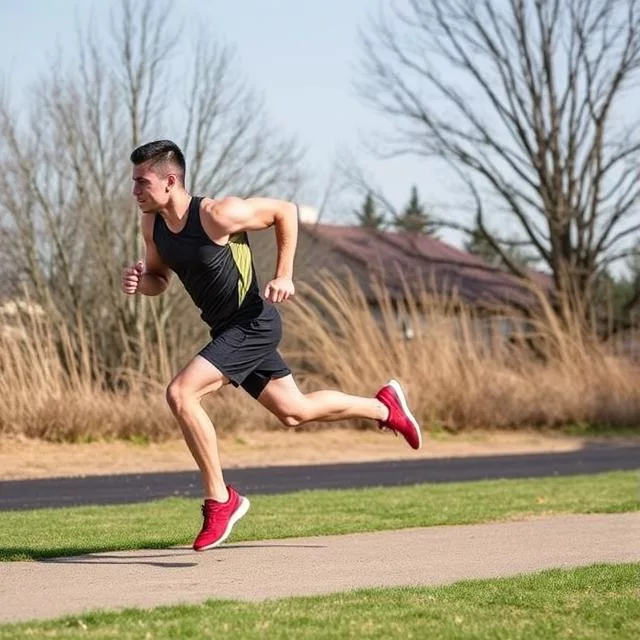
Does running increase leg strength? The simple answer is yes, but that doesn’t give you the what, how and why, which is required to help you achieve your best, safely. Now, for the good news, if you’re trying to improve leg strength, regardless of your sport, the answers are below.
Does Running Increase Leg Strength?
The Truth Behind the Stride
Running is more than a cardiovascular workout, it’s a dynamic, full-body movement that can reshape your lower body. But does running increase leg strength in a meaningful way? Let’s dive into the biomechanics, training strategies, and science-backed insights that separate myth from real muscular development.
The Science – How Running Stimulates Leg Muscles
Running recruits nearly every major muscle in your lower body:
- Quadriceps: Work during push-off and landing phases to stabilize and extend the knee.
- Hamstrings: Control leg swing, absorb impact, and decelerate movement.
- Glutes: Drive hip extension, maintain posture, and provide propulsion.
- Calves and Tibialis Anterior: Support foot strike, balance, and forward movement.

However, not all running equally builds strength. Long-distance jogging predominantly engages slow-twitch muscle fibers, ideal for endurance but limited in producing visible hypertrophy. Sprinting, hill running, and resistance-style runs recruit fast-twitch fibres, which are critical for power, explosive strength, and muscular growth.
Does Running Increase Leg Strength in All Runners?
The impact of running on leg strength depends heavily on your fitness level and training methods:
- Beginners: Often experience initial gains due to neuromuscular adaptation, the nervous system becomes more efficient at recruiting muscle fibres.
- Intermediate/Experienced Runners: May plateau without targeted intensity, such as sprint intervals, hill work, or weighted runs.
- Sprinters and Trail Runners: Typically develop more muscular legs than marathoners because of higher-intensity, variable terrain work.
Bottom line: Steady-state jogging alone will improve endurance but only moderately increase leg strength. For visible muscle definition and power, progressive overload is essential.
How Running Increases Leg Strength – Proven Methods
If your goal is to truly increase leg strength through running, incorporating strategic variations is key. Here’s what works:
1. Hill Sprints for Maximum Power
Running uphill mimics resistance training, forcing your quads, glutes, and calves to work against gravity. Short bursts of uphill sprinting can dramatically improve explosive strength.
2. Interval Training to Activate Fast-Twitch Fibres
High-intensity intervals, like alternating between sprinting and jogging, stimulate fast-twitch fibres, enhancing leg power, speed, and muscular endurance.
3. Forefoot or Barefoot Running for Stabilization
Shifting from a heel-strike to a forefoot strike engages stabilizing muscles in the calves, feet, and ankles, contributing to stronger, more resilient legs.
4. Running Drills for Neuromuscular Efficiency
Incorporate drills such as A-skips, bounding, and high knees to train muscle coordination, improve stride mechanics, and indirectly increase leg strength.
Pair these strategies with adequate protein intake and recovery. Muscles grow during rest, not just during the run.
Does Running Increase Leg Strength Enough to Replace Leg Day?
This is a question many fitness enthusiasts ask, and the answer is nuanced. While running develops functional leg strength, it cannot fully replace resistance training:
- Running applies bodyweight loads, which are often insufficient for maximal hypertrophy.
- Strength exercises like squats, deadlifts, and lunges directly target and overload muscles.
- Combining running with strength training yields the best results—running enhances endurance and coordination, while lifting builds size and raw power.
Expert Insights – The Science-Backed Truth
Studies support that running contributes to leg strength, but the degree depends on intensity and style:
- Research shows sprinting and hill running increase lower limb power and cross-sectional muscle area.
- Endurance runners primarily improve muscle efficiency and tendon resilience rather than significant hypertrophy.
- Hybrid programs, running plus resistance work, produce superior results in strength, muscle tone, and athletic performance.

Final Verdict – Does Running Increase Leg Strength?
Yes, but context matters. Running can enhance leg strength, especially when it includes:
- Sprints
- Hills
- Variable terrain
- Targeted running drills
However, for maximal muscle growth and power, running should complement a structured resistance-training program rather than replace it.
Key Takeaway: If, you want strong, sculpted legs, don’t just run, run smart and strategically. At Ultimate Training Gear we believe if you’re going to do it, do it right! Your comments, appreciation or questions are welcome below.
Ultimate Training Gear.