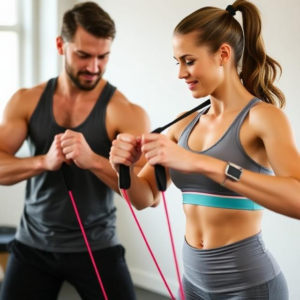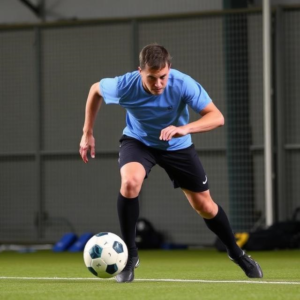
Sports rehabilitation is a necessity in the world of sports performance. And there’s nothing worse than being physically unable to perform at your best. Regardless of your sport, be it on a professional level, or purely just for recreation, if you’re injured, it’s time to seek out the best method for rehabilitation. You’ve come to the right place for guidance.
Sports Rehabilitation
A Comprehensive Guide to Recovery, Performance, and Resilience
Sports rehabilitation is like a beacon of hope for anyone stepping away from the playing field due to injuries. However, it is far more than simply fixing a broken bone or healing a torn ligament. Sports rehabilitation is a structured, evidence-based, and performance-driven process designed to reduce pain, restore mobility, rebuild strength, and ultimately return athletes to competition safely and confidently.
In today’s performance-focused world, recovery is not optional, it is strategic. Whether working with elite professionals or recreational athletes, sports rehabilitation plays a critical role in long-term athletic success.
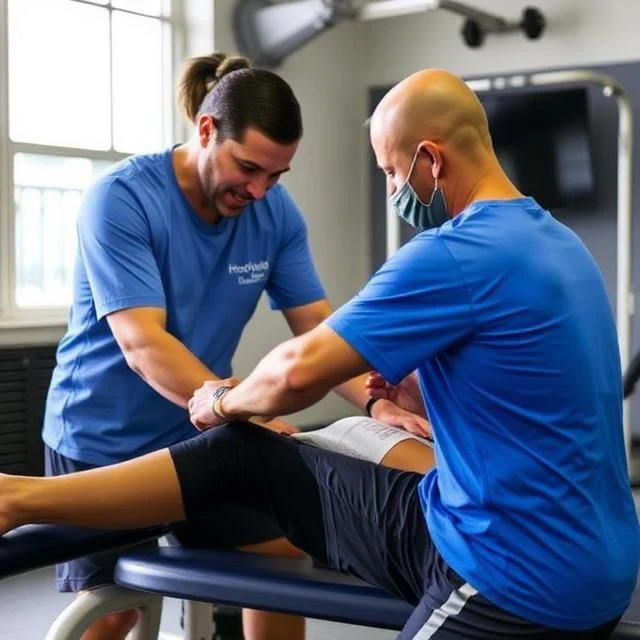
What Is Sports Rehabilitation?
At its core, sports rehabilitation is a specialized branch of physical therapy focused on evaluating, treating, and preventing sports-related injuries. Importantly, it does not stop at symptom management. Instead, it addresses underlying biomechanical weaknesses, movement inefficiencies, and sport-specific demands.
Unlike general rehabilitation, sports rehabilitation emphasizes:
- Return-to-play readiness.
- Performance optimization.
- Injury prevention strategies.
- Psychological resilience.
Therefore, the goal is not merely recovery, it is returning stronger, smarter, and more durable than before.
The Evolution of Sports Rehabilitation
The roots of sports rehabilitation stretch back centuries. Ancient athletes relied on rudimentary methods such as massage and herbal remedies. However, modern sports rehabilitation integrates biomechanics, exercise science, neuroscience, and technology.
Today’s protocols are shaped by evidence-based research and organizations such as:
- American Physical Therapy Association.
- National Athletic Trainers’ Association.
Consequently, recovery has become more precise, measurable, and outcome-driven. Motion analysis systems, force plates, neuromuscular assessments, and wearable technology now allow clinicians to make data-informed decisions that dramatically improve rehabilitation outcomes.
Key Principles of Sports Rehabilitation
At the heart of effective sports rehabilitation lies a set of foundational principles.
1. Personalized Care in Sports Rehabilitation
No two athletes, and no two injuries, are identical. Therefore, individualized treatment plans are essential. Personalized care considers:
- Injury severity.
- Sport-specific demands.
- Training history.
- Psychological readiness.
- Performance goals.
Customization ensures that recovery is not only efficient but also sustainable.
2. Progressive Overload and Functional Recovery
Recovery must follow a carefully structured progression. Initially, the focus may be pain management and mobility. However, as healing progresses, strength, neuromuscular control, and power become priorities.
Gradual loading prevents re-injury while restoring tissue capacity. In other words, the body must be challenged strategically to rebuild resilience.
3. Holistic Performance-Based Approach
Rehabilitation integrates physical, nutritional, and psychological components. Rather than isolating the injured area, clinicians evaluate the entire kinetic chain. For example, a knee injury may stem from hip instability or poor ankle mechanics.
By addressing root causes, targeted rehabilitation reduces the risk of recurrence.
Common Injuries Treated in Sports Rehabilitation
Sports rehabilitation centers frequently treat:
- Ligament sprains (e.g., ankle sprains).
- Muscle strains.
- Tendinitis and tendinopathy.
- Rotator cuff injuries.
- ACL injuries.
- Stress fractures.
For instance, anterior cruciate ligament (ACL) tears are prevalent in pivot-heavy sports like soccer and basketball. Research popularized by orthopedic pioneers such as James Andrews has shaped surgical and post-operative sports rehabilitation protocols that prioritize strength symmetry and neuromuscular retraining before return to play.
Each injury presents unique mechanical and physiological challenges. Therefore, a targeted rehabilitation strategy is critical.
Techniques and Modalities For Rehabilitation
Sports specific rehabilitation offers an extensive toolbox of techniques. Importantly, no single modality works in isolation. Instead, clinicians integrate multiple strategies for optimal results.
Evidence-Based Techniques Applied During Rehabilitation
Common techniques include:
- Manual therapy.
- Therapeutic exercise.
- Neuromuscular re-education.
- Proprioceptive training.
- Strength and conditioning integration.
- Dry needling and soft tissue mobilization.
Moreover, progressive resistance training has become central to modern sports rehabilitation, as research consistently demonstrates its role in tendon healing and muscle regeneration.
Technology Advancing Rehabilitation
Emerging technologies are transforming how sports rehabilitation is delivered. For example:
- Motion capture systems analyze gait and movement inefficiencies.
- Wearable sensors track load management.
- Virtual reality enhances neuromotor training.
- AI-assisted analytics personalize exercise prescriptions.
Consequently, rehabilitation is becoming increasingly data-driven. These innovations provide precision that was unimaginable just decades ago.
Balancing Rest and Load Management
One of the most critical aspects of sports rehabilitation is finding the balance between rest and stress. Complete inactivity can delay recovery due to stiffness and deconditioning. Conversely, excessive loading may worsen tissue damage.
Therefore, clinicians use periodic programming, gradually increasing load while monitoring pain, swelling, and functional capacity.
The Human Element in Sports Rehabilitation
Rehabilitation is not purely physical. In fact, the psychological dimension often determines the success of return-to-play outcomes.
Mental Health in Sports Rehabilitation
Athletes sidelined by injury frequently experience:
- Anxiety.
- Frustration.
- Fear of re-injury.
- Loss of identity.
Rehabilitation programs increasingly incorporate sports psychology principles. Confidence rebuilding, visualization techniques, and graded exposure to sport-specific tasks play a vital role in restoring competitive readiness.
Building a Support System During Rehabilitation
A strong support network significantly improves recovery outcomes. Coaches, family members, teammates, and healthcare professionals collaborate to reinforce motivation and accountability.
Furthermore, clear communication between the athlete and medical team ensures alignment in expectations and timelines.
Nutrition and Lifestyle That Benefits Rehabilitation
Recovery does not happen in the clinic alone. It continues 24/7 through nutrition, sleep, and lifestyle habits.
Key nutritional considerations include:
- Adequate protein intake for muscle repair.
- Omega-3 fatty acids to reduce inflammation.
- Vitamin D and calcium for bone health.
- Proper hydration for tissue elasticity.
Additionally, sleep is a cornerstone of recovery. Growth hormone release during deep sleep supports tissue regeneration. Therefore, athletes who neglect rest often prolong their rehabilitation timeline.
Injury Prevention – The Often Overlooked Goal of Sports Rehabilitation
Perhaps the most valuable outcome of sports rehabilitation is injury prevention. Once recovered, athletes should not simply resume old habits.
Instead, rehabilitation programs often conclude with:
- Movement screening.
- Strength imbalance correction.
- Sport-specific conditioning.
- Load management education.
Preventative strategies reduce recurrence rates and enhance longevity in sport.
Return-to-Play Criteria in Sports Rehabilitation
A critical component of sports rehabilitation is determining when an athlete is truly ready to return.
Return-to-play decisions should be based on objective criteria such as:
- Strength symmetry (typically 90% or greater compared to the uninjured side).
- Functional hop tests.
- Agility assessments.
- Psychological readiness scales.
Importantly, clearance should be performance-based, not simply time-based.
Why Rehabilitation Matters More Than Ever
As sports become faster and more competitive, injury rates remain significant. However, with structured rehabilitation program, athletes are no longer limited to “rest and hope.”
Instead, they follow a systematic process rooted in science, guided by professionals, and strengthened by resilience.
Moreover, sports rehabilitation teaches life-long lessons in discipline, patience, and adaptability. Athletes often emerge not only physically restored but mentally fortified.
Final Thoughts on Sports Rehabilitation
Sports rehabilitation represents the intersection of science, performance, and human determination. It restores movement. It rebuilds confidence. And most importantly, it prepares athletes not just to return, but to excel.
Injury may pause the game, but with comprehensive rehabilitation, it does not have to end it. Play hard, but be smart, please leave your comments, or questions below.
Ultimate Training Gear.