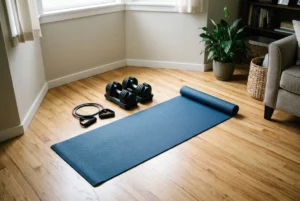

Let me introduce you to a beginner resistance band workout (Uk Guide). The guide is guaranteed to help you structure your home workouts, and build strength by following a fully planned program.
Beginner Resistance Band Workout (UK Guide)
Beginner Resistance Band Workout (UK Guide) – Build Strength at Home
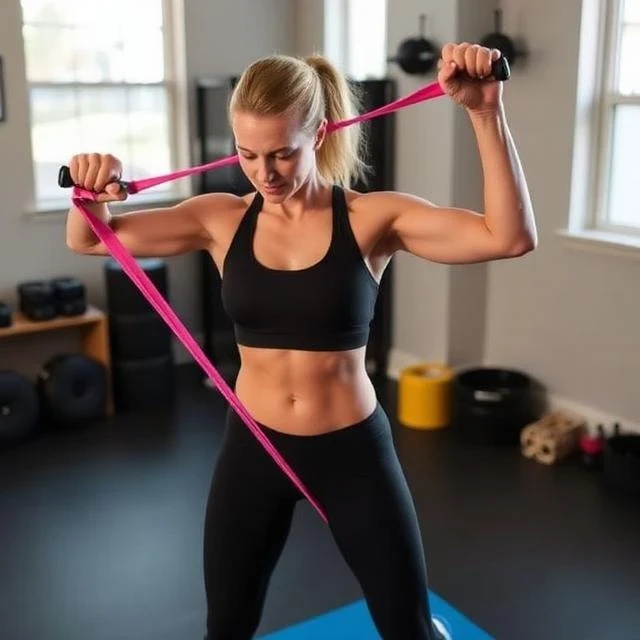
Resistance bands often get dismissed as tools for stretching or physiotherapy, but that’s a myth worth retiring. High-quality bands can generate impressive resistance, challenge every major muscle group, and help you build real strength, all without the intimidation of heavy weights or bulky gym equipment.
They’re ideal if you’re training in a small space, working with a limited budget, or simply looking for a safe and effective way to begin strength training. Whether you’re exercising in your living room, spare bedroom, garage, or even taking your workout on holiday, resistance bands make staying active simple and convenient.
The best part? You don’t need a fully equipped home gym to get results. A single set of resistance bands can provide dozens of effective exercises that improve strength, fitness, and confidence.
Why Resistance Bands Are Perfect for Beginners
Affordable Strength Training
A quality resistance band set usually costs between £10 and £25, making it one of the most affordable ways to begin exercising at home.
Unlike many pieces of gym equipment, bands allow you to perform hundreds of exercises without spending hundreds of pounds.
Easy to Store and Travel With
One of the biggest advantages of resistance bands is portability.
They fit easily into:
- A drawer
- Any gym bag
- A backpack
- A suitcase
This means you never have to miss a workout because you’re away from home.
Beginner Resistance Band Workout (UK Guide) – Gentle on the Joints
Unlike traditional weights, resistance bands provide increasing tension throughout each movement.
This smooth resistance often feels kinder on the knees, shoulders, and elbows, making bands ideal for:
- Beginners
- Older adults
- People returning after injury
- Anyone wanting lower-impact strength training
Suitable for Every Fitness Level
Resistance bands are available in a variety of strengths.
As you become stronger, simply progress to a heavier band rather than replacing your entire workout setup.
It’s an affordable way to continue improving for months, even years.
Beginner Resistance Band Workout (UK Guide) – Equipment You’ll Need
Getting started couldn’t be simpler.
You’ll only need:
- A light or medium resistance band
- An exercise mat (optional)
- A bottle of water
- A timer or phone stopwatch
That’s enough to complete an effective full-body workout almost anywhere.
Warm Up First (2–5 Minutes)
A few minutes of movement prepares your muscles and joints for exercise.
Try:
- Shoulder circles (20–30 seconds)
- Marching on the spot (30–60 seconds)
- Bodyweight squats (10–15 reps)
- Arm swings (20–30 seconds)
- Hip circles
- Gentle torso rotations
A proper warm-up increases blood flow, improves mobility, and reduces the risk of injury.
Beginner Resistance Band Workout (UK Guide)
(Insert your exercise images here.)
1. Band Squat
Targets: Quads, hamstrings and glutes
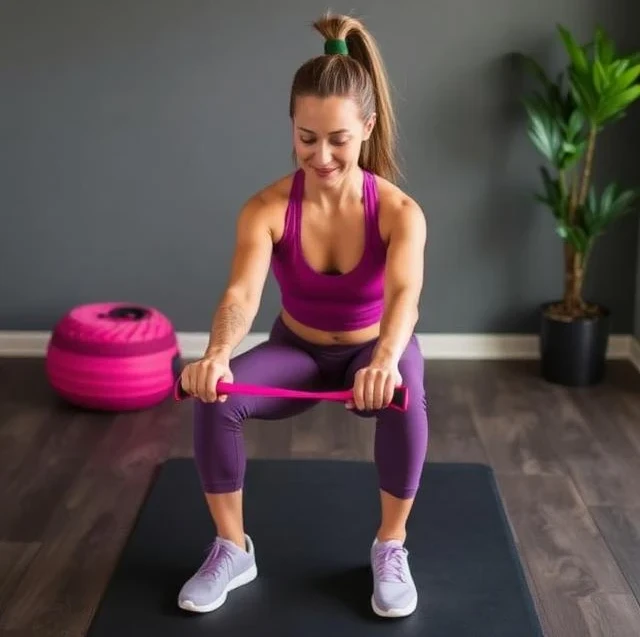
Stand on the band with your feet shoulder-width apart and hold the handles (or ends) at shoulder height. Lower into a controlled squat before standing back up.
2. Standing Row
Targets: Upper back, lats and posture muscles
Anchor the band securely in front of you and pull your elbows backwards while squeezing your shoulder blades together.
3. Chest Press
Targets: Chest, shoulders and triceps
Anchor the band behind you and press forwards until your arms are extended before returning slowly.
4. Overhead Press
Targets: Shoulders and upper back
Stand on the band and press upwards under control while keeping your core engaged.
5. Pall of Press (or Band Dead Bug)
Targets: Core stabilisers
This movement teaches your core to resist rotation, helping improve balance, posture and overall stability.
Workout Structure
Keep things simple.
Perform:
40 seconds work
20 seconds rest
Complete all five exercises before resting for 60 seconds.
Repeat the circuit 2–3 times depending on your fitness level.
Consistency matters far more than speed.
Beginner Resistance Band Workout (UK Guide) – Beginner Tips
If, you’re completely new to resistance training:
- Move slowly and stay in control.
- Focus on good technique before increasing resistance.
- Keep breathing throughout every repetition.
- Stop if you experience sharp pain.
- Leave one or two repetitions “in the tank” rather than training to complete exhaustion.
Building confidence is just as important as building strength.
Beginner Resistance Band Workout (UK Guide) – Common Mistakes to Avoid
Many beginners make the same simple mistakes.
Avoid:
- Using a band that’s too heavy.
- Allowing the band to lose tension.
- Snapping the band back after each repetition.
- Holding your breath.
- Skipping the warm-up.
- Using damaged or worn bands.
Small improvements in technique quickly add up.
Four-Week Progression Plan
Week 1
- 2 rounds
- Light resistance
- 40 sec work / 20 sec rest
Week 2
- 3 rounds
- Light to medium band
- Maintain the same timing
Week 3
- 3 rounds
- Medium resistance
- Reduce rest to 15 seconds
Week 4
- 3–4 rounds
- Medium resistance
- Increase work periods to 45–50 seconds
There’s no rush to progress. Only move on when your technique remains solid throughout every exercise.
Beginner Resistance Band Workout (UK Guide) – Training Schedule
A simple routine could look like this:
Day Activity
Monday Resistance Band Workout
Tuesday 20–30 minute walk
Wednesday Mobility or stretching
Thursday Resistance Band Workout
Friday Light cardio
Saturday Optional third workout
Sunday Rest and recovery
Remember, recovery is part of the programme, not a break from it.
How to Know You’re Making Progress
Progress isn’t just about using a stronger band.
Look for improvements such as:
- Better technique.
- More controlled movements.
- Completing extra rounds.
- Feeling less tired after each session.
- Greater confidence using your equipment.
These are all signs that your body is getting stronger.
Continue Your Home Fitness Journey
If, you’re enjoying resistance band training, you may also like:
- 20-Minute Full-Body Dumbbell Workout
- 4-Week Beginner Dumbbell Plan
- Home Gym Equipment Beginners Should Buy First
- Home Gym Setup Guide UK
- Adjustable Dumbbells vs Resistance Bands
- Budget Home Gym Under £300
Each guide builds on the last, helping you create a home fitness routine that’s simple, affordable, and sustainable.
Last Words on Beginner Resistance Band Workout (UK Guide)
Resistance bands prove that effective strength training doesn’t require expensive machines, heavy weights, or a commercial gym membership.
With just one set of bands, a little space, and a willingness to stay consistent, you can improve your strength, mobility, and overall fitness from the comfort of your own home.
Remember, your results won’t come from owning more equipment, they’ll come from showing up regularly, using good technique, and gradually challenging yourself over time.
Start where you are, stay patient, and enjoy the journey. Every workout is another step towards becoming stronger and healthier.
Ultimate Training Gear