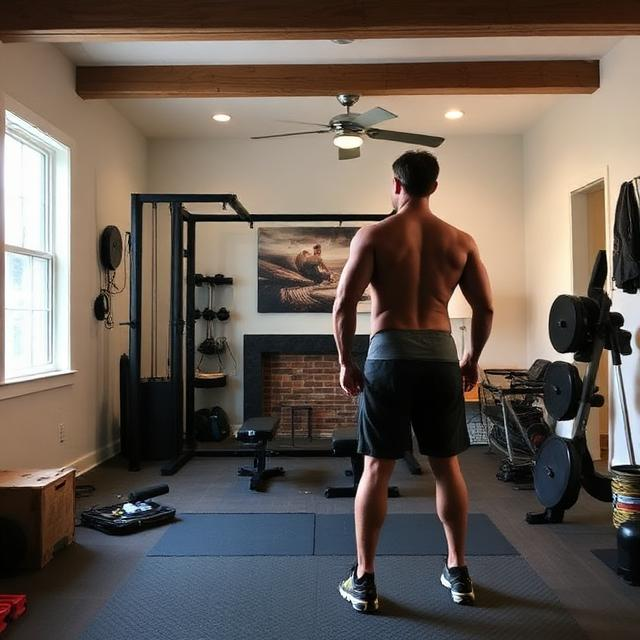
Have you given any thoughts about creating your first home workout routine. It’s an important step to take, once you have purchased some equipment. Your routine should have a purpose, and a goal. In this chapter you’re going to discover how to create and use a workout routine, to maximise your goals.
Creating Your First Home Workout Routine
The Paralysis Problem
Beginners don’t fail because they’re lazy. They fail because they’re overwhelmed.
They spend weeks – sometimes months – doing everything except training:
- Researching
- Buying equipment
- Watching YouTube
- Reading workout plans
- Comparing routines
- Overthinking every detail
And then they freeze. Sound familiar? You’re certainly not alone. Many beginners spend more time planning their workouts than actually exercising. They worry about choosing the “perfect” routine when, in reality, there isn’t one. Progress comes from taking action, learning as you go, and making small improvements over time.
This chapter breaks that paralysis by giving you the simple truth:
“Simple always beats perfect. Starting always beats planning”
A basic routine done consistently will outperform a “perfect” routine that never leaves the notebook.
Quick Take
In this chapter you’ll learn:
- How to choose a workout routine that matches your goals.
- Why simple routines outperform complicated ones.
- The movement patterns every beginner should know.
- How to build consistency without burnout.
- Why recovery is just as important as training.
1. Start With Your Goal
Before building any routine, beginners need clarity. Not complicated physiology. Not a 12 week periodised plan.
Just a simple question:
“What do I want right now?”
Most beginners fall into one of four categories.

Choose One Primary Goal
One mistake beginners often make is trying to achieve everything at once. They want to lose weight, build muscle, improve fitness, increase flexibility, and train for a marathon, all at the same time.
While it’s possible to make progress in several areas at once, choosing one primary focus makes planning much easier.
Ask yourself:
- What matters most to me right now?
- What result would make the biggest difference to my life?
- Which goal am I most likely to stay committed to?
Once you’ve answered those questions, build your routine around that priority. You can always adjust your focus as your fitness improves.
Creating Your First Home Workout Routine – Beginner Tip
No need to wait until Monday.
Don’t wait until next month.
Don’t wait until you’ve bought the “perfect” equipment.
Start with what you have, where you are, and build from there.
Fat Loss
The priority here is movement. Not heavy lifting. Not advanced programming. Just getting the body working consistently.
Useful tools:
- Walking – the most underrated fat loss tool on earth
- Circuits – simple, repeatable, full‑body
- Bands – joint‑friendly, accessible
- HIIT (light) – short bursts, not punishment
The message: Move more, move often, keep it simple.
Creating Your First Home Workout Routine – Muscle Building
This requires structure.
Key elements:
- Strength sessions – full‑body or upper/lower
- Progressive overload – improving something every week
- Recovery – sleep, protein, rest days
Beginners don’t need bodybuilding splits. They need consistency and gradual progression
Creating Your First Home Workout Routine – General Fitness
This is the “I want to feel better” category.
A combination works best:
- Strength
- Cardio
- Mobility
Nothing extreme. Just balanced training that improves energy, confidence, and daily movement.
Creating Your First Home Workout Routine – Mobility & Health
Often overlooked, but vital for:
- Older beginners
- People returning from inactivity
- Anyone with stiff joints
- People who simply want to feel good again
Useful tools:
- Stretching
- Walking
- Bands
- Balance work
This category builds the foundation for everything else.
2. How Many Days Per Week?
This is one of the most important decisions for beginners.
People assume they need 5–6 days per week. They don’t.
Here’s the truth:
- One day? Still worthwhile. One good session per week beats zero.
- Two days? Solid progress. Very achievable.
- Three days? The sweet spot. Enough frequency to improve, not enough to overwhelm.
- Four days? Excellent if recovery is good.
- Five plus? Only if training is planned properly. Most beginners burn out here.
The message you want readers to feel:
Three sessions per week is enough.
Enough to build strength. Lose fat. Enough to transform their body.
That reassurance keeps people consistent.
3. The Six Movement Patterns
Most beginner articles skip this entirely – and it’s a huge mistake.
If, someone understands movement patterns, they can build hundreds of workouts without ever feeling lost.
Think of these movement patterns as the building blocks of strength training. Rather than memorising dozens of individual exercises, you’ll simply learn a handful of movement patterns that can be adapted to suit any fitness level.
Every full‑body workout should include:
- Push
- Pull
- Squat
- Hinge
- Core
- Carry (optional but fantastic)
If, they learn these patterns, they’ll never need to memorise long routines. They’ll understand why exercises matter, not just what to do.
This is how you build confident lifters.
This will be one of the most valuable sections in the entire guide.
A simple, sensible, repeatable routine.
Creating Your First Home Workout Routine – Warm Up
- 5 minutes walking
- Shoulder circles
- Hip circles
- Bodyweight squats
Nothing complicated. Just getting the body ready.

Beginner Full-Body Workout
Exercise Sets Reps
Goblet Squat 2–3 8–12
Incline Press-Up 2–3 8–12
Resistance Band Row 2–3 10–15
Romanian Dead lift 2–3 8–12
Standing Overhead Press 2–3 8–12
Plank 2 20–40 sec
This covers every movement pattern. Because it’s joint‑friendly. It’s scalable. It’s achievable for almost everyone.
Cool Down
- Stretching
- 5–10 minutes
Again – simple beats fancy.
5. Progressive Overload
Link this to your previous chapter on progressive overload.
Explain the core principle:
Don’t change everything – Just improve something.
Examples:
- one more rep
- slightly better form
- slightly longer plank
- Lift a slightly heavier dumbbell
- slightly slower tempo
- one extra workout completed this month
Remember, your body doesn’t know what day it is or which workout you’re following. It simply responds to being challenged a little more than last time.
6. Recovery
This section is huge.
Beginners underestimate recovery more than anything else.
Key elements:
- Sleep – the biggest performance enhancer
- Protein – essential for muscle repair
- Hydration – affects energy, strength, and focus
- Rest days – where the actual progress happens
- Walking – low stress movement
- Mobility – keeps joints happy
The message:
Recovery is training.
If, they ignore recovery, they will stall. If they prioritise it, they will thrive.
Creating Your First Home Workout Routine – Listen to Your Body
Feeling slightly sore after a workout is perfectly normal, especially when you’re starting out. However, sharp pain, persistent fatigue, or discomfort that affects your daily activities shouldn’t be ignored. Rest when needed, focus on good nutrition and sleep, and don’t be afraid to take an extra recovery day if your body needs it.
Recovery isn’t a sign of weakness, it’s part of the training process that allows your body to adapt and improve.
7. Tracking Progress
Beginners need feedback. It keeps them motivated and shows them they’re improving.
Options:
- Completing your workouts consistently
- Strength increases
- Better technique
- More energy
- Better sleep
- Confidence
- Progress photos
Progress isn’t measured by body weight alone.

Celebrate improvements such as:
- Lifting heavier weights
- Completing more repetitions
- Better technique
- Improved balance
- More energy
- Better sleep
- Clothes fitting differently
- Increased confidence
Some of the biggest victories never appear on a scale.
The most important thing to celebrate?
Consistency.
Not perfection. Not intensity. Or comparison.
Consistency.
8. Beginner Mistakes
This is where you reinforce authority and prevent frustration.
Common mistakes:
- Changing routines weekly
- Too much volume
- Too much weight
- Training every day
- Skipping warm ups
- Comparing themselves to influencers
- Ignoring recovery
- Not enjoying training
- Expecting results after only 2 weeks
- Skipping workouts after missing one session
Each of these leads to burnout, injury, or quitting.
Your job is to steer them away from all of it.
9. Sample Weekly Routine
A simple, achievable weekly plan:
Monday – Full Body A
Tuesday – Walk
Wednesday – Rest
Thursday – Full Body B
Friday – Walk
Saturday – Mobility
Sunday – Rest
This is realistic. Balanced. Sustainable.
And most importantly – repeatable.
Creating Your First Home Workout Routine – Remember Why You Started
There will be days when motivation disappears. That’s completely normal. On those days, don’t focus on having the perfect workout, focus on simply showing up. Even a short 15-minute session keeps your routine alive and reinforces the habit you’re building.
Fitness isn’t about being perfect. It’s about being consistent enough that exercise becomes part of your lifestyle.
10. Checklist
A simple daily/weekly checklist:
- Did I train?
- Did I recover?
- Have I eaten well?
- Did I improve something?
- Did I enjoy it?
If, they can tick most of these boxes, they’re on the right path.
Last Words on Creating Your First Home Workout Routine
Your first workout routine doesn’t need to be perfect.
It doesn’t need fancy exercises, expensive equipment, or hours of training each week.
It simply needs to be realistic enough that you’ll still be following it months from now.
Every experienced lifter started somewhere, and almost every successful fitness journey began with a handful of simple exercises performed consistently.
As your confidence grows, your routine will naturally evolve. You’ll learn what you enjoy, discover what challenges you, and gradually build a programme that fits your lifestyle and goals.
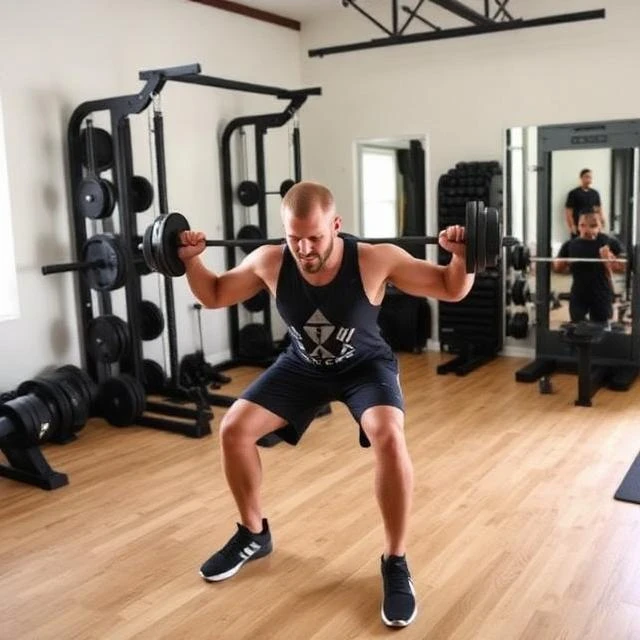
The important thing is to begin
Because every workout you complete is another step towards becoming stronger, healthier, and more confident than you were yesterday.
Remember, your routine doesn’t have to impress anyone else. It simply has to be one you’ll keep coming back to.
Chapter 5 Key Takeaways
- Choose one primary goal before building your routine.
- Three well-planned sessions each week are enough for most beginners.
- Focus on movement patterns rather than memorising endless exercises.
- Improve one small thing each workout through progressive overload.
- Consistency and recovery produce better long-term results than perfection.
If, you’ve found this post useful share it, and leave a comment below.
Ultimate Training Gear