
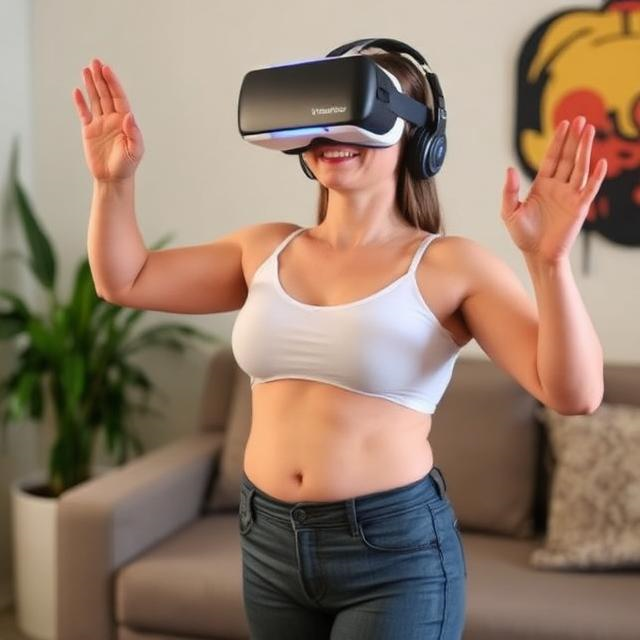
Welcome to the future, which is losing weight with virtual reality in 2026. The expansion of these tools are life changing. AI is being used in many ways, losing weight by using digital tools, is just another avenue, that will keep on growing.
So, as the world expands the use of AI, so will the use of VR become a positive force in stimulating movement, and ultimately weight loss.
Losing Weight With Virtual Reality In 2026
The Immersive Fat Loss Revolution
Virtual reality is no longer confined to entertainment. In fact, Losing Weight With Virtual Reality In 2026 has emerged as one of the most innovative and sustainable approaches to fat loss in the digital age.
For years, the biggest obstacle in weight loss hasn’t been knowledge, it’s been adherence. People know they should exercise. However, motivation drops, routines become repetitive, and gym intimidation creeps in.
Now, immersive VR fitness is rewriting that narrative.
By combining behavioral psychology, artificial intelligence, biometric tracking, and gamified training systems, VR has evolved into a serious fat-loss tool. And as we move deeper into 2026, its adoption is accelerating globally.
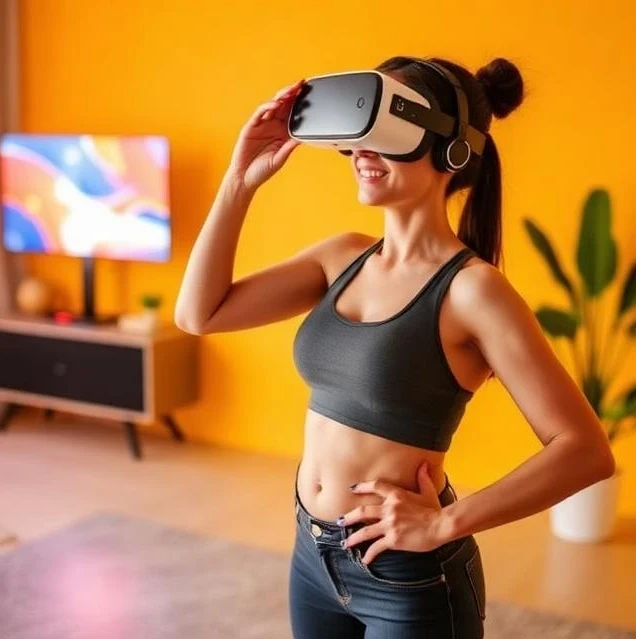
Why Losing Weight With Virtual Reality In 2026 Works When Traditional Programs Fail
Traditional fitness programs depend heavily on willpower. Meanwhile, VR leverages immersion.
When you’re boxing in a futuristic arena, climbing virtual mountain ranges, or competing in rhythm-based challenges, your brain shifts from “I have to work out” to “I get to play.”
Platforms like Supernatural, FitXR, and Beat Saber have demonstrated measurable calorie expenditure comparable to moderate-intensity cardio sessions.
Moreover, gamification improves adherence because:
- Progress feels rewarding.
- Performance is measurable.
- Competition increases engagement.
- Sessions feel shorter due to immersion.
Consequently, users often train longer without experiencing mental burnout.
The Physiology Behind Losing Weight With Virtual Reality In 2026
To build authority, let’s go deeper into the science.
Weight loss requires a sustained caloric deficit. However, the method of achieving that deficit matters for sustainability.
Cardiovascular Output
Modern VR fitness experiences frequently elevate heart rate into Zone 2 and Zone 3 intensity ranges. Therefore, they support:
- Fat oxidation.
- Cardiovascular endurance.
- Metabolic conditioning.
In high-intensity VR boxing or combat simulations, users may reach near-HIIT exertion levels.
Full-Body Muscle Engagement
Thanks to advanced tracking in devices like the Meta Quest 3 and PlayStation VR2, workouts now integrate:
- Lower-body squats.
- Rotational core movements.
- Upper-body strikes.
- Reactive agility drills.
As a result, total body activation increases caloric expenditure beyond stationary cardio machines.
Hormonal & Neurological Effects
Importantly, immersive novelty stimulates dopamine release. Unlike repetitive gym routines, VR environments evolve constantly. Therefore, users are less likely to experience mental fatigue.
Additionally, engaging environments reduce perceived exertion, meaning workouts feel easier than they physiologically are.
That psychological advantage alone can dramatically increase long-term fat-loss success.
Integrating Losing Weight With Virtual Reality In 2026 Into a Sustainable Lifestyle
One of the most powerful aspects of VR fitness is friction reduction.
There’s:
- No commute.
- Little to no, gym anxiety.
- No weather barriers.
- No waiting for equipment.
Consequently, workout consistency improves.
Micro-Workouts & Habit Stacking
VR also supports short, high-impact sessions. Even 20–30 minutes per day can meaningfully contribute to a weekly caloric deficit.
When paired with:
- Morning routine stacking.
- Post-work decompression sessions.
- Family-friendly group VR activities.
It becomes easier to integrate exercise naturally.
Nutrition Still Matters – A Critical Component of Losing Weight With Virtual Reality In 2026
Let’s be clear, VR alone does not override nutrition.
However, immersive fitness improves energy expenditure and motivation, making dietary discipline easier to maintain.
For optimal results:
- Prioritize protein intake (0.7–1g per lb of bodyweight).
- Maintain a moderate caloric deficit (300–500 calories daily).
- Stay hydrated.
- Track progress weekly.
When VR training is combined with smart nutrition, fat loss accelerates significantly.
AI Personalization in Losing Weight With Virtual Reality In 2026
Artificial intelligence is transforming VR fitness from entertainment into coaching.
Modern systems can:
- Adjust difficulty based on fatigue.
- Monitor movement efficiency.
- Detect form breakdown.
- Suggest recovery days.
- Track long-term progress.
As AI improves, adaptive resistance, biometric syncing, and predictive plateau prevention will become standard features.
Therefore, Losing Weight With Virtual Reality In 2026 increasingly resembles a digital personal training ecosystem.
Mental Health & Behavioral Benefits
Weight loss isn’t purely physical.
Immersive VR training also:
- Reduces stress.
- Improves mood through endorphin release.
- Enhances self-efficacy.
- Decreases social anxiety.
Furthermore, for individuals intimidated by traditional gyms, VR provides privacy without sacrificing intensity.
This psychological safety net often makes the difference between quitting and continuing.
Potential Drawbacks of Losing Weight With Virtual Reality In 2026
To maintain credibility, balance is essential.
Equipment Cost
High-quality headsets may present an upfront investment.
Motion Sensitivity
Although modern devices have reduced motion sickness, sensitivity varies.
Screen Time Concerns
Excessive digital exposure should still be moderated.
Limited Heavy Resistance Training
While VR excels at cardio and functional movement, traditional resistance training may still be necessary for maximal muscle hypertrophy.
Therefore, a hybrid fitness model may be optimal.
The Global Impact of Losing Weight With Virtual Reality In 2026
Perhaps the most exciting aspect is accessibility.
VR fitness eliminates geographic limitations. Individuals in remote areas gain access to high-level training environments without gym infrastructure.
Consequently, immersive fitness may:
- Reduce global inactivity rates.
- Improve accessibility for people with mild mobility challenges.
- Lower long-term healthcare costs related to obesity.
The broader public health implications are significant.
Frequently Asked Questions About Losing Weight With Virtual Reality In 2026
Can you really lose weight using VR workouts?
Yes. When VR sessions elevate heart rate and are performed consistently within a caloric deficit, weight loss is achievable. Many VR programs reach moderate-to-high intensity levels comparable to traditional cardio.
How many calories can you burn in a VR workout?
Depending on intensity, users may burn anywhere from 200 to 600+ calories per hour. High-intensity boxing or rhythm-based sessions often produce higher outputs.
Is Losing Weight With Virtual Reality In 2026 better than going to the gym?
It depends on goals. VR excels at engagement, adherence, and cardio conditioning. However, for maximal muscle growth, traditional strength training may still be superior. Many users combine both.
Do you need expensive equipment?
A quality VR headset and a safe play space are essential. While there is an upfront cost, it may replace recurring gym fees.
Is VR fitness safe for beginners?
Yes, provided users start gradually, maintain proper hydration, and ensure clear play space. As with any exercise program, consulting a healthcare provider is advisable for individuals with preexisting conditions.
Final Verdict – Is Losing Weight With Virtual Reality In 2026 the Future?
Fitness trends come and go. However, immersive, AI-enhanced, gamified exercise addresses the core issue that has always sabotaged weight loss: boredom and inconsistency.
By making movement engaging, measurable, and personalized, Losing Weight With Virtual Reality In 2026 positions itself as more than a novelty. It represents a paradigm shift in how we interact with physical activity.
As technology continues to evolve, VR fitness may become not just an alternative, but a primary driver of global health transformation.
If, you’ve enjoyed this post, share it, and let us know how VR has helped you lose weight below.
Ultimate Training Gear