Saying healthy when modern life isn’t built for it. Most people don’t lose their health in one dramatic moment. It slips away in small decisions repeated daily: the lift instead of the stairs, the meal deal instead of the meal, the extra hour of screen time that eats the hour meant for a walk. None of those choices feels like much on its own. Stacked across a working week, a working year, a working decade, they add up to the tired, stiff, low-energy version of a person that so many adults now consider normal.
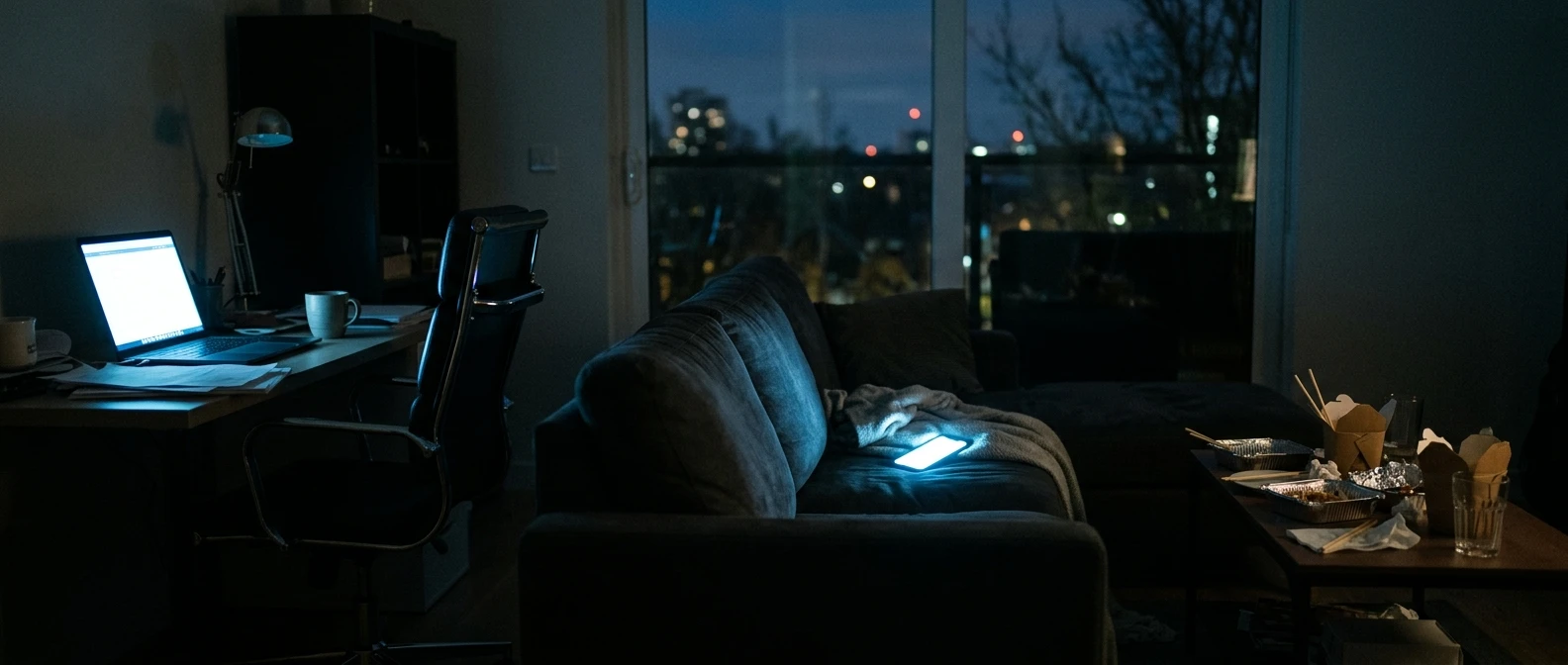
Modern life did not set out to damage anyone’s health, but almost everything about the way we now work, travel and relax quietly works against it. This piece looks at why that happens and how diet, exercise and home training fit together as one lifestyle, not three separate projects competing for the same spare hour. Get the whole picture right and each part becomes easier, not harder.
Why Modern Life Is Working Against Your Health
Fifty years ago, a normal day forced a certain amount of movement and effort on most people whether they chose it or not. Jobs involved standing, walking, lifting and carrying. Meals were cooked from raw ingredients because there wasn’t much alternative. Evenings had a natural off switch once the television shut down for the night.
That environment has disappeared for a large share of the population. Work is done sitting down, often from home, with a screen a few inches from the face for eight or more hours a day. Food arrives ready made, heavily processed and engineered to be eaten quickly. Entertainment never switches off, so the evening slide from sofa to bed can happen without a single flight of stairs climbed or a single proper meal cooked.
None of this is a personal failing. It’s a design problem. The systems around us, commuting, supermarkets, advertising, workplace layouts, are built for convenience and profit, not for the body’s actual needs. Staying healthy with a busy modern lifestyle means working against that design on purpose, because it will not happen by accident.
The Desk, the Screen and the Sofa – Where Today’s Habits Quietly Break Down
Three places account for most of the damage: the desk, the screen and the sofa. Each one looks harmless in isolation. Together they can account for sixteen or more hours of a twenty-four hour day spent sitting still.
Sitting for long stretches slows circulation, tightens the hip flexors, rounds the shoulders forward and weakens the muscles around the spine that are meant to hold posture upright. The body adapts to the position it spends the most time in, and if that position is a slumped seated one, the body becomes better at sitting and worse at standing, walking and lifting.
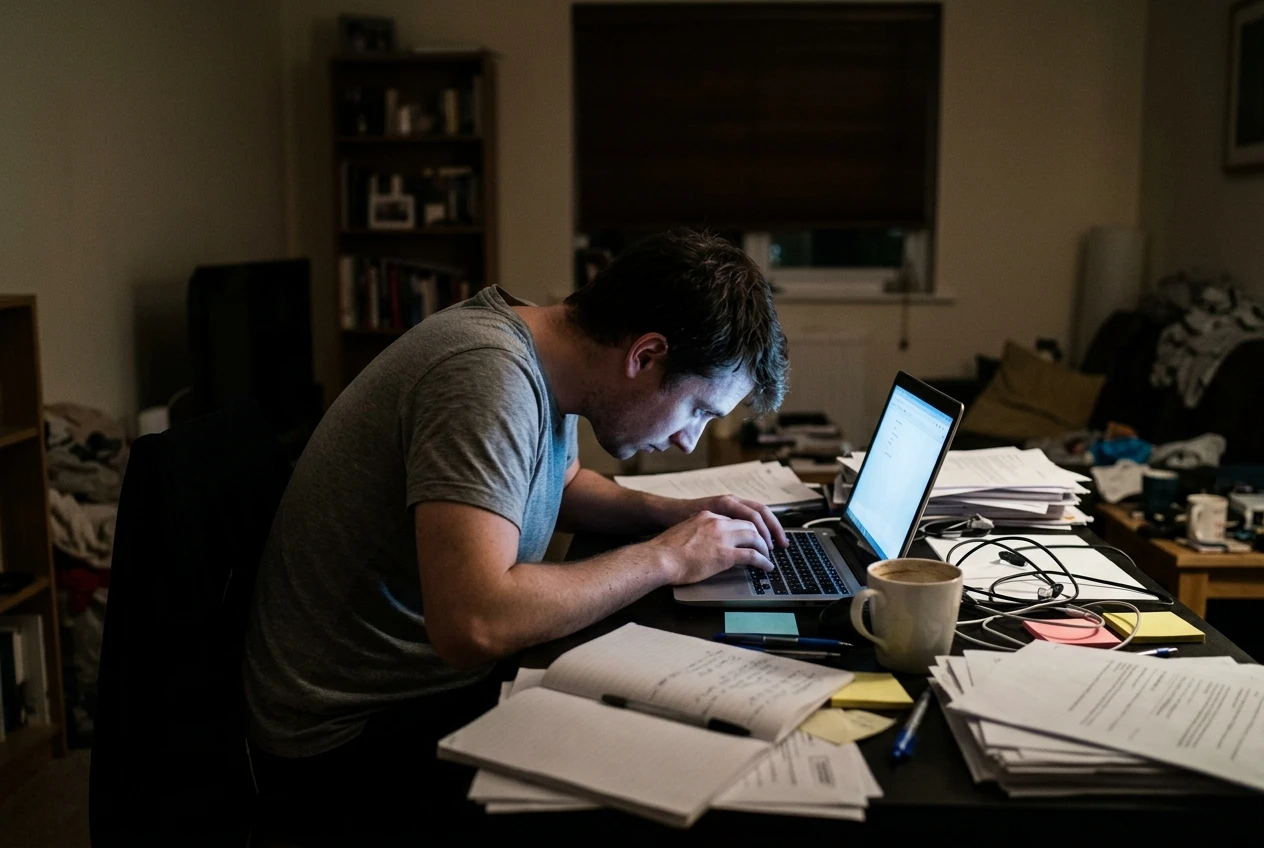
Screens add a second layer. Beyond the eye strain and the neck held forward over a phone, screen time displaces the time that used to go to movement, cooking and sleep. A scroll through social media before bed is rarely replacing a workout, but it is very often replacing the twenty minutes that could have gone to one, or to preparing tomorrow’s lunch instead of buying it.
The sofa finishes the pattern in the evening, turning the last waking hours of the day into another sitting block layered on top of the one at the desk. By the time most adults reach bedtime, they have asked almost nothing of their muscles, their heart or their lungs since they got up. The fix is not to feel guilty about any of this. It’s to notice where the day is actually going and change a handful of those hours on purpose.
Staying Healthy When Modern Life Isn’t – Diet Shifts That Fit a Genuinely Busy Week
Diet advice often assumes time nobody busy actually has: hours of meal prep, exotic ingredients, elaborate recipes. Realistic change comes from a small number of shifts applied consistently rather than a complicated plan followed for a fortnight and abandoned.
Start with protein at each meal. It keeps hunger under control for longer than refined carbohydrates do, which cuts down on the mid-afternoon biscuit tin and the late-night snack. Eggs, yogurt, tinned fish, chicken and lentils are all quick to prepare and keep well, which matters more on a busy week than variety does.
Batch cooking one or two meals at the weekend removes the single biggest trigger for convenience food: arriving home tired with nothing ready. A big pot of something simple, chilli, soup, a curry, a stew, portioned into containers, turns a weeknight dinner into a reheat rather than a decision made under pressure.

Cutting back on liquid calories makes a bigger difference than most people expect. Sugary coffees, soft drinks and alcohol add up fast and carry almost no nutritional value in return. Swapping even half of those for water or black coffee is one of the lowest effort changes available.
None of this needs to be perfect. A busy week will always include a takeaway, a missed lunch, a biscuit grabbed between meetings. The goal is a pattern that mostly works, not a diet that only works when life cooperates.
Staying Healthy When Modern Life Isn’t – What Regular Exercise Actually Does for Body and Mind
Exercise is often sold on appearance, but its real value runs much deeper than how a person looks in a mirror. Regular movement improves insulin sensitivity, lowers resting blood pressure, strengthens bone density and keeps the cardiovascular system efficient. These are not cosmetic changes. They are the difference between a body that copes with stress and one that breaks down under it.
The mental effects matter just as much for anyone living a busy, pressured life. Exercise lowers circulating stress hormones and raises the chemicals in the brain responsible for mood and focus. A short walk or a brief strength session often does more for an anxious, scattered mind than another hour of rest ever could, because it gives the nervous system a clear signal that the stress has been used up rather than stored.
Strength training deserves particular mention for anyone with a desk job. Resistance work rebuilds the muscles that sitting weakens, particularly through the back, glutes and core, and it directly counters the posture problems that desk-bound hours create. It doesn’t need to mean hours in a gym. A dumbbell workout at home two or three times a week does the job for most people, and the 20-Minute Full-Body Dumbbell Workout shows how little time that actually requires.
Movement works as medicine precisely because it addresses the specific damage modern routines cause, rather than being a generic good habit. Sitting creates stiffness; movement removes it. Stress raises cortisol; exercise burns it off. The two are matched to each other almost exactly.
Staying Healthy When Modern Life Isn’t – Training at Home Without Letting It Take Over Your Life
For a lot of busy adults, the gym itself becomes the barrier. The commute, the changing rooms, the waiting for equipment, the travel time added onto the session time, can turn a thirty-minute workout into a ninety-minute commitment. Training at home removes most of that friction, provided it’s set up sensibly.
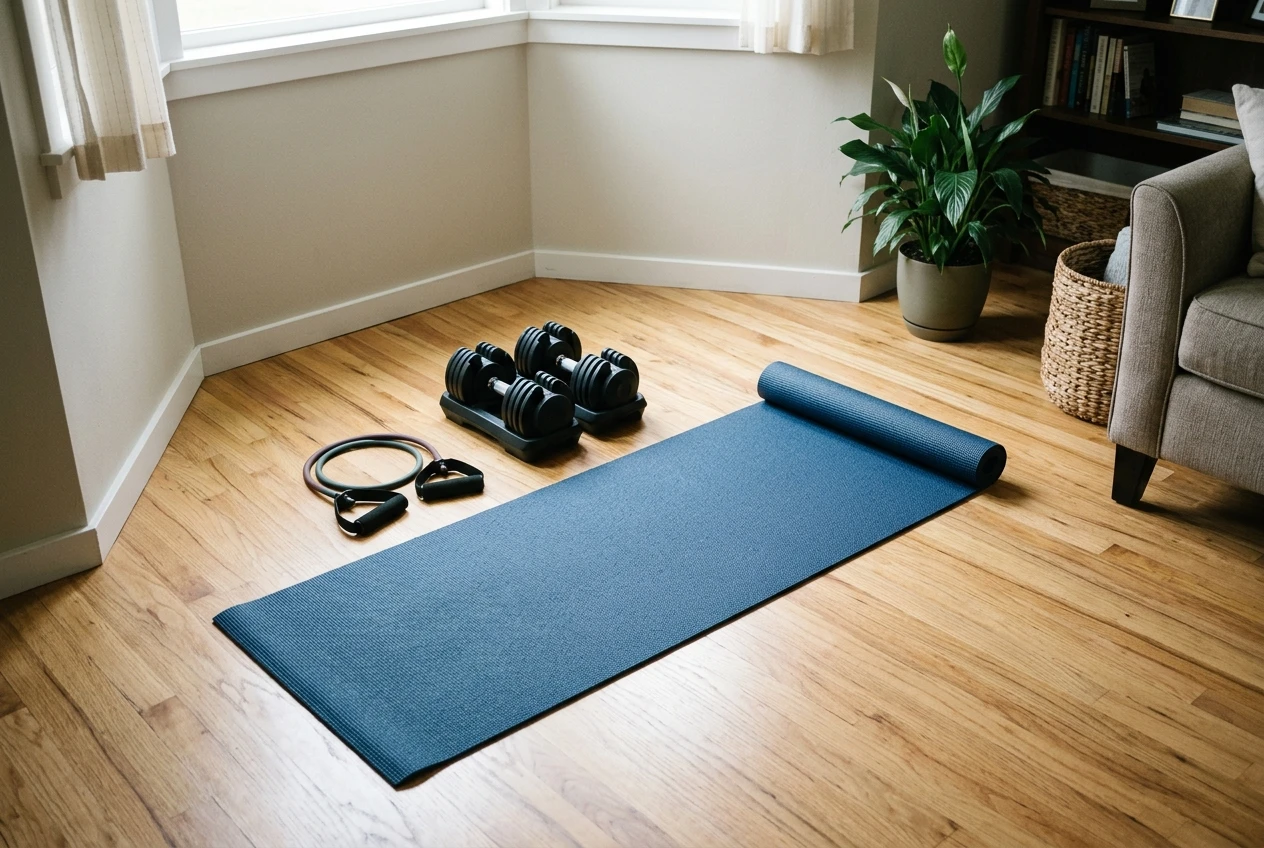
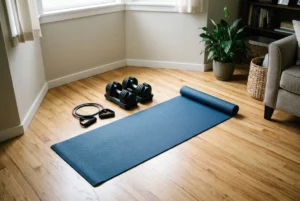
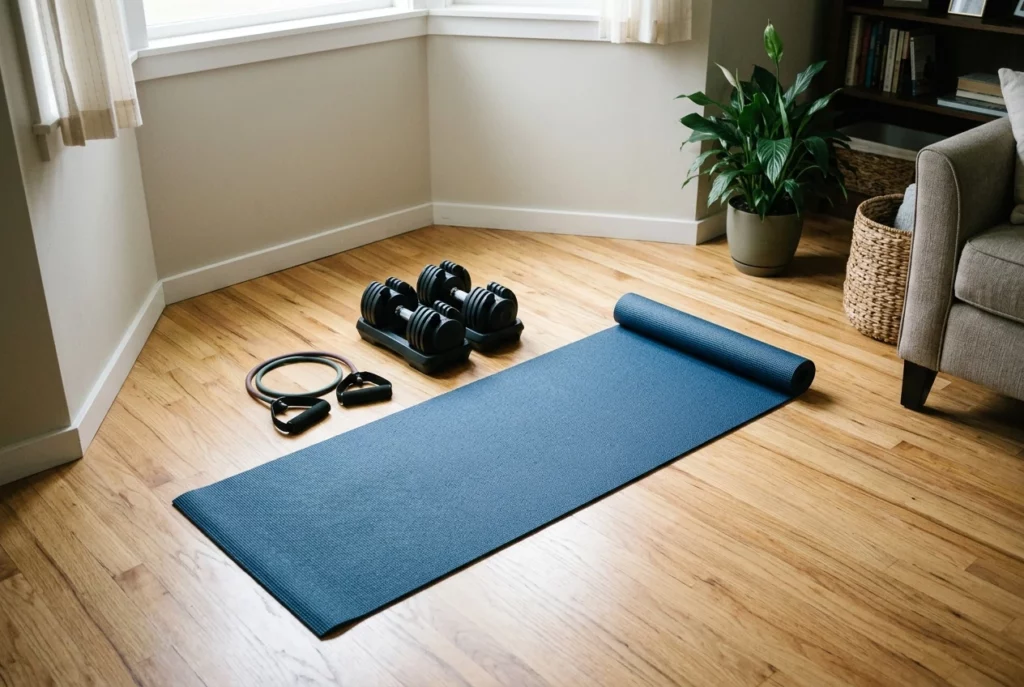
Sensible setup matters more than equipment does. A corner of a room with enough space to lie down and swing an arm is enough to start. Resistance bands, a pair of adjustable dumbbells or a kettlebell cover the vast majority of what a home strength routine needs, and each has guides worth reading before buying anything: the beginner resistance band workout and the beginner kettlebell workout are both built around exactly this kind of limited time and limited space.
The risk with home training isn’t lack of options, it’s the opposite. It’s easy to buy equipment that then sits unused once the first burst of motivation fades, which is a pattern covered in why most home gyms end up unused. The habit needs to come before the kit, not the other way round. A short, repeatable routine done consistently with minimal equipment beats an elaborate home gym used twice.
Keeping training from taking over daily life means treating it the way a busy week treats everything else: scheduled, time boxed and realistic. Twenty minutes, three or four times a week, done reliably, produces far more over a year than an hour-long session attempted sporadically and abandoned after a month.
Sleep, Stress and Recovery – The Pillar Most People Skip
Diet and exercise get most of the attention, but sleep and recovery decide how much benefit the body actually gets from either one. Training breaks muscle down; sleep is when it rebuilds. Without enough of it, the stress of a workout accumulates instead of translating into strength and fitness gains.
Poor sleep also drives poor food choices the next day. Tiredness increases cravings for sugar and refined carbohydrates because the body is looking for a quick energy fix, and it reduces the willpower available to resist them. A single bad night rarely matters much; a pattern of short, broken sleep across a busy working month changes appetite, mood and recovery all at once.
Stress works the same way in reverse. Chronic stress keeps cortisol elevated, which interferes with sleep, encourages fat storage around the midsection and slows muscle recovery after training. The modern workday, with its notifications, deadlines and constant low-grade pressure, keeps a lot of people in this elevated state almost permanently without them noticing.
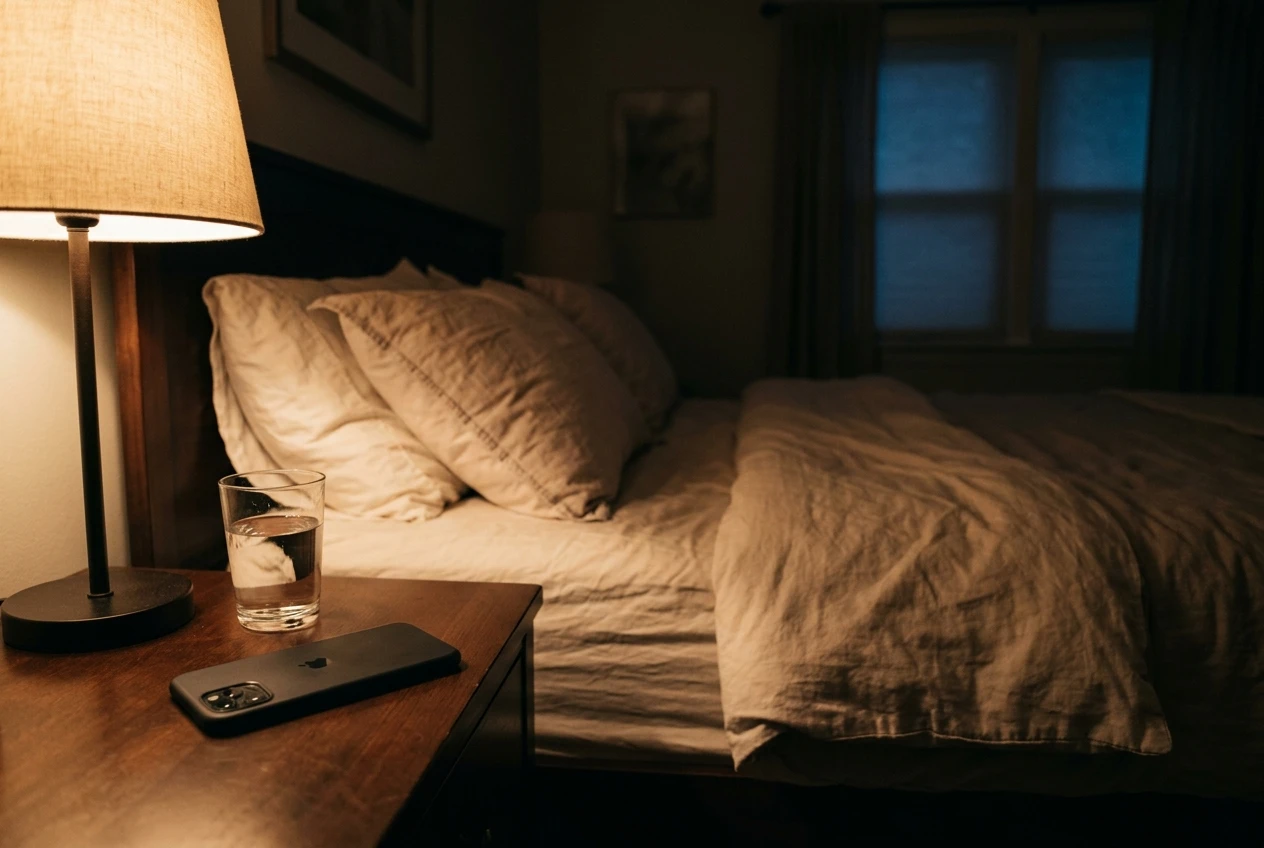
None of this requires a dramatic lifestyle overhaul. A consistent bedtime, a wind-down period without screens, and a short walk or stretch in the evening go a long way toward lowering stress and improving sleep quality. Recovery is not the reward for doing the work. It’s part of the work, and skipping it quietly undoes a share of whatever the diet and training are trying to build.
Conclusion – Staying Healthy When Modern Life Isn’t
The habits described above only matter if they survive contact with a genuinely difficult week, because every week eventually becomes one. Staying healthy when modern life isn’t built for it, requires a routine. The routine that works long term is rarely the most ambitious one. It’s the one built with enough slack to bend without breaking.
A few principles help that happen:
- Keep the minimum version small enough to do even on a bad day. A ten-minute version of the workout beats skipping it entirely.
- Decide meals and training times in advance rather than deciding in the moment, when tiredness and convenience will usually win.
- Expect disruption. A missed session or a takeaway dinner is not a failure, it’s a normal part of a busy life, and the plan should already account for it.
- Track consistency over weeks and months rather than judging any single day. A busy lifestyle produces uneven weeks by nature.
Health built this way doesn’t depend on motivation, which rises and falls with mood, workload and sleep. It depends on a routine simple enough to repeat when motivation is low, which is most of the time for most people. That’s the real goal: not a perfect week, but a pattern that keeps moving forward through the ordinary, imperfect weeks that make up most of a year.
If, you’re ready to turn this into action, start with Build Habits Before Purchasing Equipment to set your routine up properly before you spend a penny on kit. Please your comments or questions below.
Ultimate Training Gear